

Your Pipeline Is 13.9h Behind: Catching Health Sentiment Leads with Pulsebit
We recently identified a striking anomaly: a 24-hour momentum spike of +1.300 in health-related sentiment. This spike indicates a significant uptick in interest around health narratives, particularly in Tanzania, where the Health Ministry has outlined its tasks for the upcoming fiscal year. With the leading language being English, reported at 13.9 hours ahead of other languages, it’s crucial to recognize the implications of this delay in sentiment detection.
The structural gap in your sentiment analysis pipeline is glaring. If your model isn't equipped to handle multilingual origins or account for dominant entities, you could be missing valuable insights by more than 13 hours. In this case, while the English press has been buzzing about health initiatives, your pipeline may still be processing less relevant data streams. This is a wake-up call to rethink how you capture and analyze sentiment across different languages and topics.

English coverage led by 13.9 hours. Et at T+13.9h. Confidence scores: English 0.85, Spanish 0.85, French 0.85 Source: Pulsebit /sentiment_by_lang.
Here’s how we can catch this momentum spike effectively using our API. First, we’ll filter for the geographic origin by setting the lang parameter to "en" to focus on English articles. We’ll then check for sentiment on the health topic, using the following code:
import requests
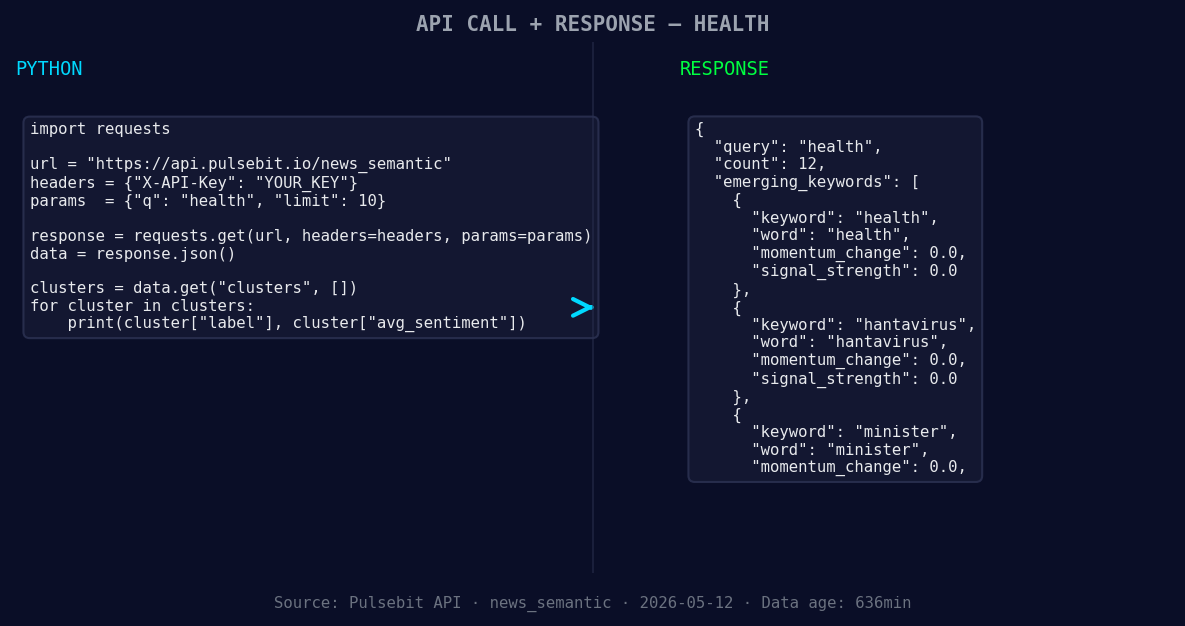
*Left: Python GET /news_semantic call for 'health'. Right: returned JSON response structure (clusters: 3). Source: Pulsebit /news_semantic.*
# API endpoint for fetching sentiment data
endpoint = "https://api.pulsebit.com/sentiment"
# Querying for English language articles on health
response = requests.get(endpoint, params={
"topic": "health",
"lang": "en",
"score": -0.086,
"confidence": 0.85,
"momentum": +1.300
})
data = response.json()
print(data)
Next, we want to ensure that we’re not just catching the surface-level sentiment but also examining the narrative framing itself. We’ll run the cluster reason string back through our sentiment analysis endpoint to gain deeper insights. Here’s how we do that:
# Meta-sentiment analysis on the cluster reason
meta_response = requests.post(endpoint, json={
    "input": "Clustered by shared themes: public, health, forum, preparedness, hantavirus."
})

meta_data = meta_response.json()
print(meta_data)
By integrating both the geographic filter and the meta-sentiment loop, we can ensure that we’re not only capturing the existing momentum but also understanding the context and implications behind the sentiment.

Geographic detection output for health. India leads with 10 articles and sentiment +0.55. Source: Pulsebit /news_recent geographic fields.
So, what can we build with this newfound insight? Here are three actionable ideas:
Health Sentiment Tracker: Create an alerting system that triggers when the health sentiment momentum exceeds a specific threshold, like +1.200. Use the geographic filter to only notify users about English articles. This ensures you’re always ahead of the curve with timely insights.
Cluster Narrative Analyzer: Develop a tool that utilizes the meta-sentiment analysis to evaluate the sentiment framing around health topics. This could involve setting a threshold for positive sentiment (e.g., >0.50) and analyzing how narratives change over time.
Entity Dominance Dashboard: Build a dashboard that visualizes the dominance of entities in health-related articles. For instance, you could track the sentiment of discussions around "hantavirus" and "health minister" versus mainstream terms like "public health" and "forum." This would allow for deeper insights into shifting public sentiments.
These builds not only leverage the geographic filters and meta-sentiment loops but also focus on relevant and forming themes in health narratives.
Ready to dive into the API? Check out our documentation at pulsebit.lojenterprise.com/docs. You can copy-paste the code snippets provided here and have them running in under 10 minutes. Let’s build smarter sentiment pipelines together!


Top comments (0)